Frequently Asked Questions
The Millworks is a once-in-a-generation community benefit development on Bellingham’s downtown waterfront — one building designed to do many things at once. Under one roof, you’ll find workforce housing, a food business incubator, nonprofit co-working space and vibrant public gathering spaces, all intentionally woven together so the people who live, work and gather here connect with each other and with this community in ways that last.
Whatcom Community Foundation brings something rare to a project of this scale: deep roots in Whatcom County paired with the institutional capacity to act. We put community priorities first. As master developer of the Millworks, we are a project catalyst, concept incubator and investor, with all the accountability and commitment that entails.
We have the relationships and trust of local and state government, community nonprofits, the business community and individual donors. That trust is what made it possible to bring 34 partner organizations to the table and to sustain this project through a decade of planning, outreach, and refinement.
There are many examples of components of Millworks, (e.g., workforce housing, food campuses, and shared kitchens). The Millworks integration of the kitchens, housing, nonprofit office space, and outdoor public gathering, is a fairly unique and bold project. While Millworks’ combination of elements may be unique, the number of community-driven mixed-use projects like this one, is growing throughout the U.S.
For examples comparable to The Kitchens @Millworks, check out:
- Fourth Plain Community Commons, in Vancouver, WA
- The Redd on Salmon Street in Portland, OR
- Martha’s Table in Washington, DC
These example projects have vibrant incubator kitchens with knowledgeable staff and onsite storage, where entrepreneurs can develop their small business ideas, receive mentoring, and build community.
Workforce housing is priced at an affordable level for people earning between 80% and 120% of the area median income (AMI). In Whatcom County, someone earning 80% of AMI, would be earning $66,750 for a single person and $85,850 for a family of three.
Workforce housing is designed for people who do not qualify for low-income housing (30% to 60% of AMI), but still find affordable housing in this area out of reach.
Source: “FY 2026 HUD Income Limits Summary,” HUD Office of Policy Development and Research, 2026 Income Limits Dataset.
This type of housing is essential to a thriving community because it:
- Retains a stable workforce for schools, healthcare providers, and local businesses
- Contributes to economic development
- Enhances health, wellbeing, and educational outcomes for everyone
- Allows for more family time by reducing commute distances
- Reduces the environmental impact and cost of commuting
The majority of housing units will be prioritized for people earning 80-120% of AMI. There may be an opportunity for local employers to invest and set aside a portion of housing units for their employees and that industry.
The Kitchens is a “local food campus,” an innovative model that strengthens local food systems. It is a place where small food businesses and startups can rent space (by the hour, month, or year, depending on the type of space) for food prep, cooking, and storage. This shared-use space includes a variety of commercial kitchens, refrigeration, freezers, and dry storage. It’s a collaborative space that allows multiple businesses to utilize professional kitchen equipment and facilities without needing to buy them individually.
It’s ideal for local:
- Value-added food producers
- Caterers
- Bakers
- Farmer’s market vendors
- Small restaurants
- Local fishers
Successful food campuses involve collaboration with local farms and other local businesses, community organizations, educational institutions, and residents. Ultimately, local food campuses benefit the community’s economy and environmental, social and nutritional well-being.
WCF has been doing work with local food system leaders for almost 20 years.
We convened stakeholders from across the food industry in Whatcom County. We asked people in the agriculture community/food industry what they wanted/needed most to build on existing assets and infrastructure. The local food campus concept emerged as a top priority from these discussions. We also looked at what is working in other communities and considered what would translate well to Whatcom County.
- One large, shared incubator kitchen with more than 12 workstations – including dedicated prep stations and cooking stations. This shared space will allow new businesses to develop and test products and handle smaller production needs.
- 4 individual accelerator kitchens for businesses at the next stage of growth and development ready for a dedicated space
- 4 processing areas for users that do not require cooking equipment
2. The Kitchens can operate 23/7. This ramps up access and the ROI (return on investment).
3. New Venture Advisors (NVA, the food system consulting firm involved with The Kitchens @Millworks almost since conception) estimates 300 to 450 new jobs will be created directly by tenant businesses by Year 10.
Restaurant turnover is real, and it’s not unique to Bellingham. Running a food business is hard, and most operators who fail cite the same barriers: high startup costs, limited access to professional equipment, and insufficient business support before they open their doors.
The Kitchens @Millworks is designed to address exactly those gaps, not just for restaurants, but for the full range of food entrepreneurs who make a local food economy thrive. By providing access to professional kitchen space without the cost of owning it, entrepreneurs can develop and test their concept, build a customer base and generate revenue before taking on the risk of a brick-and-mortar location.
The wraparound support matters as much as the space. The WWU Small Business Development Center, housed at Millworks, will provide business planning, financial coaching and technical assistance to food entrepreneurs at every stage of growth. Nationally, shared kitchen incubators that pair infrastructure with hands-on business support see notably better outcomes for their tenants than those offering space alone.
The Kitchens is also designed to create the kind of peer community that sustains businesses through difficult seasons. When food entrepreneurs share space, equipment and knowledge, they are more likely to refer each other, collaborate and survive.
Sources:
“Shared Kitchen Industry Overview and Models,” The Food Corridor.
“Why Nearly Half of New Restaurants Fail, and How Proper Training Can Change Everything,” Auguste Escoffier School of Culinary Arts blog, November 14, 2025.
Like most mission-driven food incubators, the Kitchens @Millworks will blend earned revenue from kitchen rentals and programming fees with philanthropic support, including grants and donations. This hybrid model is well-established across the field and is part of how the Kitchens is designed from the ground up. Long-term financial sustainability is a priority, and WCF is committed to building the partnerships and funding base to support it.
The Good Works Lab will have space for 10-12 tenant organizations, including the Whatcom Community Foundation itself.
Selection will depend on each organizations’ space and other relevant needs.
We will prioritize space for:
- Economic opportunity, mobility, and development organizations
- Local food and agriculture support organizations
- Organizations focused on those furthest from opportunity, including Black communities, Indigenous communities, communities of color and rural communities
The Good Works Lab will offer nonprofit tenants access to shared meeting rooms as well as a shared kitchen. In addition to dedicated space for permanent tenants, there will be flexible drop-in spaces for organizations that need occasional access. The design reflects what local nonprofits and small businesses told us they need most.
There are 4 key reasons Phase 2 will cost more than Phase 1.
- Phase 2 is much larger in size and scope. This building will be two stories taller than Phase 1 (which includes housing units and an early learning center). For Phase 2, we are building up, using the land as efficiently as possible. When you build up, it costs more. Taller buildings require additional foundation support.
- Phase 2 is a mixed-use project that includes more workforce housing (100+units), a food campus with incubator kitchens, commercial space, nonprofit space, and public gathering spaces. In addition, the infrastructure investment in the incubator kitchens is significant.
- Most of the Phase 2 housing units will be sold They will not be permanent rentals. The goal is for people to build home equity for economic prosperity. So, unit design, features and the quality of construction are important factors.
- Construction costs have risen substantially since Phase 1 was bid (pre-pandemic) and continue to fluctuate. Material prices, labor costs, global supply chain pressures and market volatility have all contributed to significant escalation across the construction industry — trends that are well-documented nationally and felt acutely in the Pacific Northwest. These are conditions outside our control, and they reinforce the importance of moving forward with urgency.
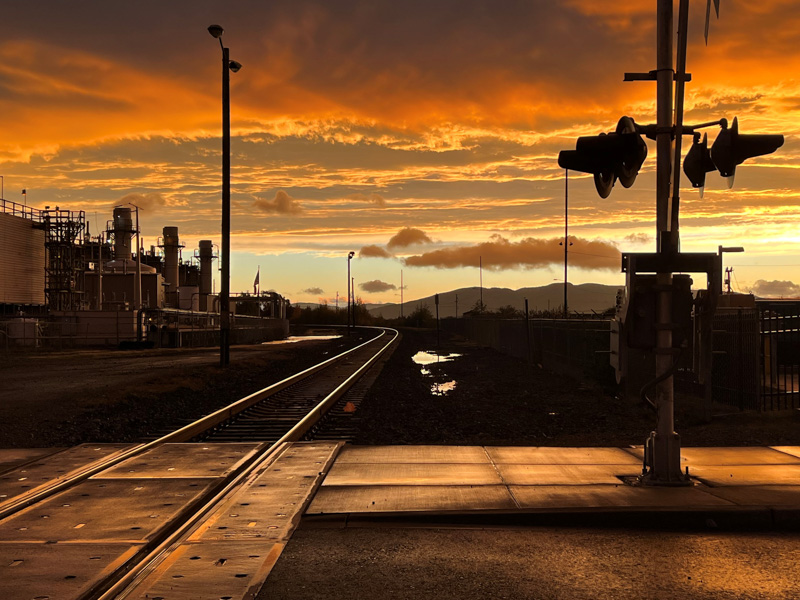
In addition, even though Phase 1 and Phase 2 are adjacent, the soils on each parcel differ. Those differences mean additional constructions costs for pilings and other foundation elements. The proximity to the rail line also adds costs.
The funding for a real estate project is called the “Capital Stack.” It is the financial structure, or layers of funding, needed to complete the project.
Millworks Phase 2 will be funded by a combination of five different sources:
- Philanthropy
- Impact Investments
- Opportunity Zone Equity Investments
- New Markets Tax Credits
- Bank Loans
NMTC is a federal program, started in 2000, designed to revitalize under-invested areas – like the Bellingham Waterfront. These tax credits jumpstart investments in communities that are often overlooked. Imagine a tool that can ignite economic opportunity and growth, create quality jobs, and improve the quality of life for people.
NMTC investments are competitive. The most attractive projects for these tax credits are those that can make a transformational impact in the community through:
- Permanent job creation
- Mixed-use property development
- New goods and services
- Access to healthy/affordable food and lifestyle options (e.g., walkability)
- Greater environmental sustainability
For the next few years, workforce housing is an explicit priority for the NMTC program which positions Millworks well for a financing allocation.
To qualify for the NMTCs, the project must be:
- Located in a low-income, distressed, under-developed area
- Transformative in size and scale
- Create quality jobs and services
Millworks Phase 2 meets all of the above federally established criteria.
People who make Impact Investments have dual objectives. They aim for financial returns and a positive impact on the world. By providing money to address a community’s pressing challenges, Impact Investments (sometimes called Catalyst Funds) can achieve both charitable and financial goals. This model challenges the traditional view that investments should focus only on financial gains, and that social/environmental issues should be addressed through philanthropy.
WCF is seeking to raise $20 Million in Impact Investments for this project.
Impact investing is a strategy to generate positive, measurable social and environmental impact alongside a financial return. It’s about aligning a person’s values and beliefs with the allocation of capital to address community and/or environmental issues.
When someone makes an Impact Investment, that money is used to achieve a shared vision for the community.The nonprofit organization then returns that original investment to the person who made it, with interest (in this case, 0-3%). That person can then re-deploy (or re-invest) that money in another project if they wish. It’s a way of “recycling” money again and again.
However, since the money is returned, there is no tax deduction like there would be for a traditional philanthropic gift.
Some of the language above is adapted from the National Philanthropic Trust, Fidelity Charitable, and Novata websites on Impact Investing.
Opportunity Zones (OZs) are designed to spur economic development and job creation in distressed communities by providing tax benefits to investors who provide new capital to eligible real estate developments and businesses operating in those federally designated OZs.
OZs were enabled for a 10-year period under the 2017 Tax Cuts & Jobs Act. In 2025, provisions were modified and made permanent as part of H.R. 1.
For investments made on or after January 1, 2027, the deferral and basis step-up mechanics have been significantly restructured under IRC §1400Z-2(b):
- Rolling 5-year deferral: Deferred gain is recognized 5 years from the date of investment, rather than on December 31, 2026. This gives the program a permanent, rolling deferral window.
- 10% basis step-up at 5 years: Investors receive a single 10% step-up in basis on the deferred gain after a 5-year hold. The additional 7-year 15% step-up from OZ 1.0 has been eliminated.
- 30% basis step-up for rural investments: Investors in Qualified Rural Opportunity Funds (QROFs) — funds investing exclusively in rural Qualified Opportunity Zones — receive a 30% basis step-up after 5 years instead of 10%.
- 30-year exclusion window: Under the amended IRC §1400Z-2(c), investors who hold their QOF investment may step up their basis to fair market value at sale (if sold before 30 years), or to fair market value at the 30-year mark if the investment is held that long.
- 10-year appreciation exclusion remains intact and unchanged: Investors who hold a QOF investment for at least 10 years may still elect to step up their basis to fair market value upon sale, excluding all post-acquisition appreciation from federal capital gains tax. This benefit is available under both OZ 1.0 and OZ 2.0, and it remains the primary reason most investors choose to participate in the program.
The Bellingham Waterfront is currently in a Qualified Opportunity Zone in the state of Washington, one of three in Whatcom County. The next decennial census tract designations will be made official on January 1, 2027. Local jurisdictions included the downtown Bellingham census tract in their recommendation to the Governor’s Office. States are required to submit their nominations to the Department of the Treasury by September 28, 2026, with an optional extension until October 28, 2026. Federal announcement of the approved tracts may be made prior to the official date of designation.
To learn more about OZ 2.0 on the Washington State Department of Commerce website, click here or click here for IRS information on Qualified Opportunity Funds.
Source: “What is Opportunity Zones 2.0?,” OpportunityZones.com.
Initially, the building will be owned by the Millworks, LLC. The Community Foundation will have a majority ownership stake in the Millworks LLC, and additional partners will include OZ investors and potentially others. After a 10-year period, the OZ investors will exit the Millworks LLC and a portion of the rental units will convert to permanent housing. (Tenants will have the opportunity to purchase their units, with the goal of helping people build home equity and economic prosperity).
The Community Foundation is exploring the viability of creating a Community Investment Trust (CIT) for some or all of the commercial spaces. CITs make it possible for people of modest incomes to buy into real estate ownership in an affordable way, building their assets through a vehicle that minimizes their investment risk. Some of the commercial tenancies may convert to condos for sale.